


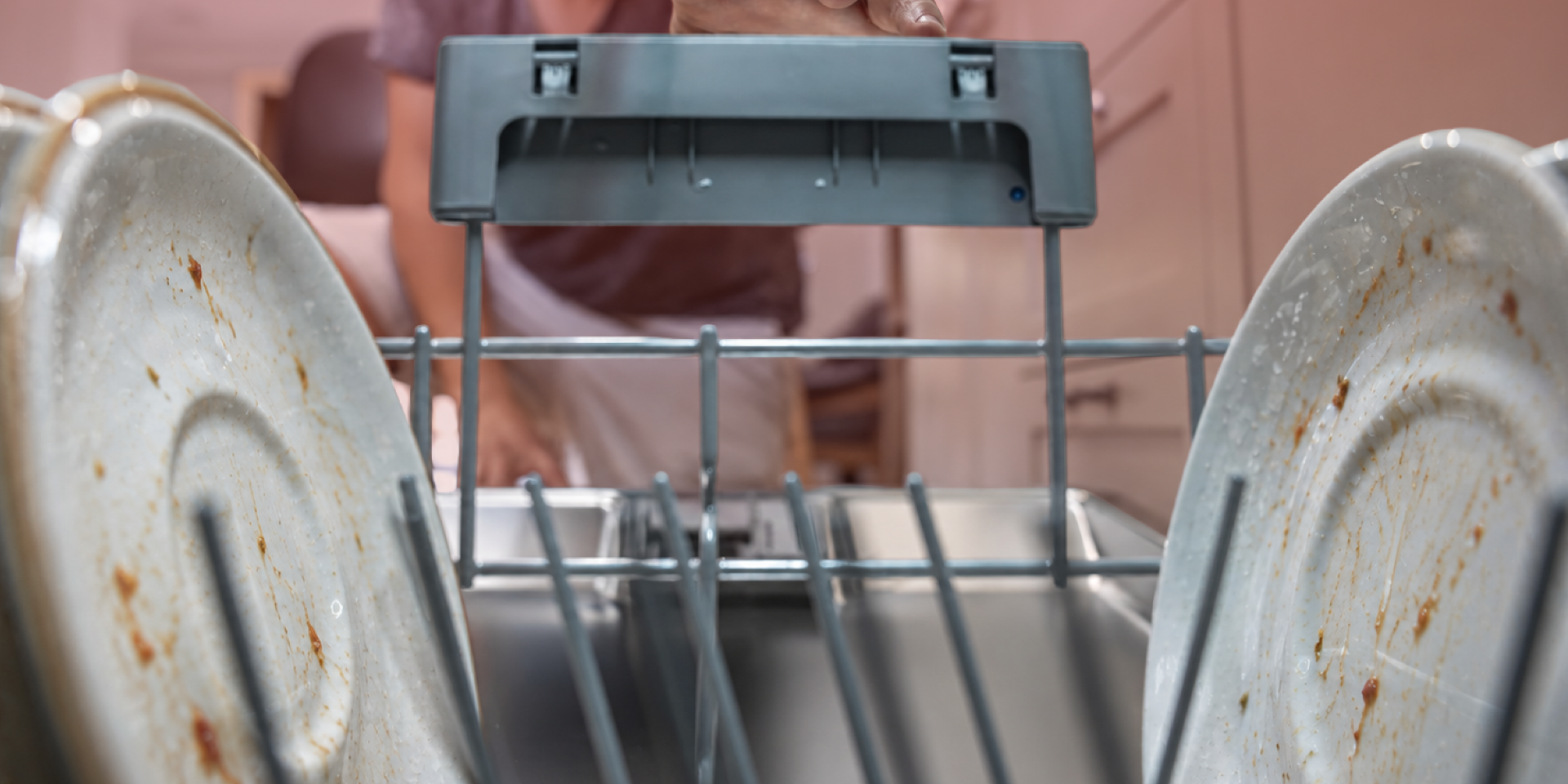

Don’t panic if you find water at the bottom of your dishwasher. Standing water doesn't always mean something is wrong with the machine. A small amount of water around the sump or filter can be normal on some dishwasher models.
A noticeable pool of water after the cycle ends warrants closer attention, especially if it is dirty or contains food debris. Before assuming the dishwasher needs repair, start with the easiest drainage checks.
1. Check Whether the Standing Water Is Normal
Before troubleshooting, check where the water is pooling and how much is left behind. A small amount of clean water in the recessed filter or sump area may be normal, depending on the dishwasher design.
However, dirty water, food particles, or water that continues building up between cycles can indicate that the dishwasher is not draining properly. If you’re unsure what is normal for your model, check your dishwasher’s manual.
2. Clean the Filter and Drain Area
Food particles and debris can restrict the path water takes out of the dishwasher. Check whether your model has a removable filter at the bottom of the tub. If it does, remove and rinse the filter according to your dishwasher's instructions.
While the filter is out, look for visible debris around the sump or drain area. Pieces of food, labels, seeds, small bones, or even broken glass can interfere with drainage.
Remove only debris you can see and safely reach, and avoid taking apart the pump or reaching into areas not designed for routine cleaning.
3. Check the Drain Hose
The drain hose carries wastewater from the dishwasher to the household drain. A kinked, pinched, or clogged hose can slow or stop that flow. Check the accessible portion of the hose under the sink and behind the dishwasher for obvious bends or crushing.
The way the hose is installed also matters. Depending on the dishwasher and local plumbing requirements, the drain may use a high loop or air gap to help prevent wastewater from flowing back into the tub.
Check the installation instructions for your specific dishwasher rather than relying on one universal hose height.
4. Check the Garbage Disposal or Air Gap
If your dishwasher drains through a garbage disposal, make sure the disposal and sink drain are clear. A blockage on the sink side can prevent dishwasher water from draining properly. Running the disposal before starting the dishwasher may help clear food from the shared drain path.
Pay extra attention if the garbage disposal was recently installed or replaced. New disposals have a knockout plug in the dishwasher inlet that must be removed before the dishwasher can drain through that connection.
If your sink has an air gap, check it for debris as well. The air gap is usually located near the faucet and can become clogged, preventing water from draining freely. Note that not every kitchen has one, so this check only applies if an air gap is part of your plumbing setup.
Signs You Need Dishwasher Repair
If you've cleaned the filter, checked for debris, inspected the drain hose, and ruled out the garbage disposal or air gap, but water still remains in the tub, the problem may be coming from a component inside the dishwasher.
A common possibility is the drain pump, which pushes water out of the tub and through the drain hose. If you hear humming during the drain portion of the cycle but no water is moving, the pump may be blocked or failing.
Other internal drainage components can also cause water to remain in the tub. Depending on the dishwasher design, the problem may involve a valve, wiring, control component, or another part of the drain system. Identifying the exact cause usually requires proper testing.
At that point, professional diagnosis is the safest way to identify the problem. Consider calling for dishwasher repair if:
- Standing water keeps returning after each cycle.
- The dishwasher doesn't drain at all.
- You hear unusual humming, grinding, or other new noises.
- The dishwasher starts leaking.
- An error code keeps returning after basic troubleshooting.
Before paying for repair, check whether the dishwasher is still covered by the manufacturer's warranty. If the problem may be covered, contact the manufacturer or an authorized service provider first.
When to Consider Dishwasher Replacement
Whether to repair or replace depends on more than the drainage problem itself. If the dishwasher is otherwise reliable and the repair cost is reasonable, keeping the current machine may make sense.
Replacement may make more sense when the dishwasher is older, has needed several repairs, or the repair estimate is high compared with the cost of a new model.
If a replacement makes sense, Southern Appliance carries both built-in and portable dishwashers from major brands. Browse dishwashers at Southern Appliance to see what's available, or stop by our store, and we'll help you find the right fit for your kitchen.